

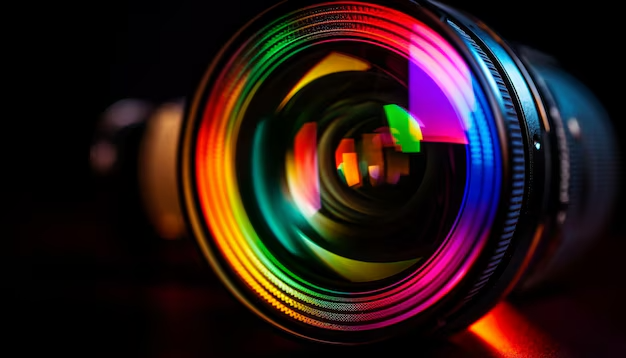
Most photographers hit a wall at some point.
Not a wall of skill more of a wall of possibility. You’ve learned your camera thoroughly. You understand light and how to work with it. Your images are doing what you want them to do. And then a quiet but persistent feeling arrives: that there’s more out there, somewhere beyond the boundaries of what your current setup can access.
For a lot of photographers, full spectrum camera conversion is what’s on the other side of that wall. And what’s there genuinely surprises people who find it.

The Light Your Camera Has Been Hiding From You
Here’s something that most photographers don’t know and that changes how they think about their cameras once they do.
Your camera’s sensor can see significantly more than you’ve ever seen in your photographs.
Digital image sensors are sensitive to ultraviolet light, the full visible spectrum, and infrared light. That’s a much broader range of electromagnetic radiation than the human eye perceives. The reason your photographs have always looked more or less like what your eyes see is not because the sensor is limited to that range it’s because the camera manufacturer installed a filter specifically to restrict it.
That filter called a hot mirror or IR cut filter sits directly in front of the sensor inside the camera body. It was put there to make your photographs look natural and accurate. And it does that job effectively. But in doing so, it permanently blocks your camera from accessing the full range of light it’s physically capable of detecting.
Full spectrum camera conversion is the process of removing that filter and replacing it with optically clear glass that lets everything through. UV, visible light, infrared all of it reaches the sensor freely. The camera that was deliberately restricted becomes capable of seeing the full spectrum of light that surrounds us constantly but that we have no direct way of perceiving.
What that capability makes possible is genuinely extraordinary.
The Infrared World That’s Always Been There
The most immediately accessible application of full spectrum camera conversion and the one that produces the most visually striking results for the widest range of photographers is infrared photography.
Infrared light exists everywhere. Right now, as you read this, infrared radiation is reflecting off every surface in your environment the trees outside, the walls around you, the sky overhead. Your eyes can’t see any of it. Your unconverted camera’s sensor can detect it but the hot mirror filter prevents it from recording it. After full spectrum conversion with an infrared filter, your camera records a world that’s invisible to human perception.
The results look unlike anything produced by visible light photography. Deciduous trees and grass which reflect infrared light strongly glow with a brilliant white luminescence that gives landscapes an ethereal, almost dreamlike quality. Clear blue skies go dramatically dark. Clouds emerge with stark contrast against that dark sky. Skin tones in portrait photography take on a smooth, almost porcelain quality. Water becomes still and mirror-like.
None of this can be fully replicated in post-processing. The infrared version of a scene genuinely looks different from the visible light version in ways that software manipulation of standard images approximates but never quite achieves. The only way to get it is to actually capture infrared light which requires a sensor that can access it.
Before full spectrum camera conversion, shooting infrared with a standard camera means exposure times measured in minutes because the hot mirror blocks almost all the infrared light making handheld infrared photography effectively impossible. After conversion, infrared filters become genuinely practical for handheld shooting. The entire photographic experience becomes fluid rather than technically constrained.
What It Means for Astrophotography
For photographers drawn to the night sky, full spectrum camera conversion opens up possibilities that go well beyond what infrared landscape work suggests.
The objects that define deep sky astrophotography emission nebulae, star-forming regions, the dramatic hydrogen-alpha structures that appear in some of the most celebrated astronomical images emit light at wavelengths that the hot mirror filter in standard cameras significantly attenuates or blocks.
The hydrogen-alpha emission line that’s responsible for the red and pink tones in nebula imagery sits at 656 nanometers at the very edge of the visible red spectrum where the hot mirror filter is already beginning to reduce sensitivity. A standard camera captures a fraction of this signal. A full spectrum converted camera, paired with a hydrogen-alpha filter, captures it in full recording the emission detail in nebulae and star-forming regions that makes deep sky images look the way they do in the most spectacular astrophotography you’ve encountered.
The practical difference in astrophotography results between a standard camera and a full spectrum camera conversion is significant enough that serious astrophotographers almost universally choose to work with converted bodies for their deep sky work. The additional hydrogen-alpha sensitivity alone makes the investment worthwhile for anyone committed to emission nebula imaging.
Is Full Spectrum Conversion Right for You
Honestly this depends on where you are in your photographic journey and what you’re trying to create.
If you’re a landscape photographer who wants access to the infrared world and is curious about UV photography, full spectrum camera conversion gives you a single camera that can do everything standard photography with a UV/IR blocking filter, infrared photography with an IR pass filter, and UV photography with a UV pass filter.
If you’re an astrophotographer working on emission nebulae who wants to capture the hydrogen-alpha detail that’s currently invisible to your standard camera, conversion is probably the single most impactful upgrade available to you.
If you’re still building the foundational skills of photography and haven’t yet reached the point where your current setup is limiting what you can express creatively there may be more value in developing further before modifying equipment.
But if you’ve hit that wall. If you’ve been looking at infrared images or deep sky astrophotography and feeling the pull of something beyond what your current camera can access full spectrum camera conversion is very likely what you’ve been sensing is out there.
The world of light is wider than what you’ve been seeing. The conversion is what opens the door to the rest of it.
Meta Title:
How Full Spectrum Camera Conversion Changes Photography
Meta Description:
Discover how full spectrum camera conversion unlocks infrared, ultraviolet, and creative imaging possibilities beyond standard photography.
